menu


Real Estate Prices & Overview

Median real estate price in the City Center of Lockport is $214,297, which is less expensive than 85.3% of New York neighborhoods and 77.8% of all U.S. neighborhoods.

The average rental price in Lockport City Center is currently $1,451, based on NeighborhoodScout's exclusive analysis. Rents here are currently lower in price than 91.0% of New York neighborhoods.

Lockport City Center is an urban neighborhood (based on population density) located in Lockport, New York.

Real estate in the City Center of Lockport, NY is primarily made up of small (studio to two bedroom) to medium sized (three or four bedroom) small apartment buildings and apartment complexes/high-rise apartments. Most of the residential real estate is renter occupied. Many of the residences in the City Center neighborhood are relatively historic, built no later than 1939, and in some cases, quite a bit earlier. A number of residences were also built between 1940 and 1969.

Vacant apartments or homes are a major fact of life in Lockport City Center. The current real estate vacancy rate here is 21.8%. This is higher than the rate of vacancies in 89.7% of all U.S. neighborhoods. In addition, most vacant housing here is vacant year round. This can sometimes be the case in neighborhoods dominated by new construction that is not yet occupied. But often neighborhoods with vacancy rates this high are places that can be plagued by a protracted vacancy problem. If you live here, you may find that a number of buildings in your neighborhood are actually empty.

Notable & Unique Neighborhood Characteristics

Many things matter about a neighborhood, but the first thing most people notice is the way a neighborhood looks and its particular character. For example, one might notice whether the buildings all date from a certain time period or whether shop signs are in multiple languages. This particular neighborhood in Lockport, the City Center neighborhood, has some outstanding things about the way it looks and its way of life that are worth highlighting.

Occupations

More people work in manufacturing and as laborers here in the Lockport City Center neighborhood than in 99.7% of the neighborhoods in America. Despite the loss of manufacturing jobs across the nation, this neighborhood remains a place where, compared to other parts of the country, you will find many laborers and manufacturers.

Real Estate

Three-deckers, duplexes, old Victorian homes cut up into apartments. Independent stores on the corner selling pizza. These are some of the hallmarks of neighborhoods with lots of small 2, 3, and 4 unit apartment buildings. The Lockport City Center neighborhood really stands out in this regard, however, as it is dominated by such small apartment buildings more than nearly any other neighborhood in America. This is a stunning visual and lifestyle example of this type of neighborhood. In fact, 47.8% of the real estate here are small 2, 3, or 4 unit apartment buildings, which is a higher proportion than found in 98.2% of America's neighborhoods.

In addition, if you find historic homes and neighborhoods attractive, you love the details, the history, and the charm, then you are sure to be interested in this neighborhood. With 71.8% of the residential real estate in the Lockport City Center neighborhood built no later than 1939, and some built considerably earlier, this neighborhood has a greater concentration of historic residences than 98.9% of all neighborhoods in America. In this regard, this neighborhood truly stands out as special.

Modes of Transportation

More people in Lockport City Center choose to walk to work each day (13.7%) than almost any neighborhood in America. If you are attracted to the idea of being able to walk to work, this neighborhood could be a good choice.

Diversity

Did you know that the Lockport City Center neighborhood has more Sub-Saharan African and Irish ancestry people living in it than nearly any neighborhood in America? It's true! In fact, 12.1% of this neighborhood's residents have Sub-Saharan African ancestry and 22.5% have Irish ancestry.

Lockport City Center is also pretty special linguistically. Significantly, 11.7% of its residents five years old and above primarily speak Italian at home. While this may seem like a small percentage, it is higher than 98.5% of the neighborhoods in America.

The Neighbors

How wealthy a neighborhood is, from very wealthy, to middle income, to low income is very formative with regard to the personality and character of a neighborhood. Equally important is the rate of people, particularly children, who live below the federal poverty line. In some wealthy gated communities, the areas immediately surrounding can have high rates of childhood poverty, which indicates other social issues. NeighborhoodScout's analysis reveals both aspects of income and poverty for this neighborhood.

The neighbors in the City Center neighborhood in Lockport are low income, making it among the lowest income neighborhoods in America. NeighborhoodScout's research shows that this neighborhood has an income lower than 88.5% of U.S. neighborhoods. With 31.5% of the children here below the federal poverty line, this neighborhood has a higher rate of childhood poverty than 83.3% of U.S. neighborhoods.

The old saying "you are what you eat" is true. But it is also true that you are what you do for a living. The types of occupations your neighbors have shape their character, and together as a group, their collective occupations shape the culture of a place.

In the Lockport City Center neighborhood, 57.6% of the working population is employed in manufacturing and laborer occupations. The second most important occupational group in this neighborhood is executive, management, and professional occupations, with 23.0% of the residents employed. Other residents here are employed in clerical, assistant, and tech support occupations (12.0%), and 7.3% in sales and service jobs, from major sales accounts, to working in fast food restaurants.

Languages

The languages spoken by people in this neighborhood are diverse. These are tabulated as the languages people preferentially speak when they are at home with their families. The most common language spoken in the Lockport City Center neighborhood is English, spoken by 89.7% of households. Other important languages spoken here include Italian and Polish.

Ethnicity / Ancestry

Boston's Beacon Hill blue-blood streets, Brooklyn's Orthodox Jewish enclaves, Los Angeles' Persian neighborhoods. Each has its own culture derived primarily from the ancestries and culture of the residents who call these neighborhoods home. Likewise, each neighborhood in America has its own culture – some more unique than others – based on lifestyle, occupations, the types of households – and importantly – on the ethnicities and ancestries of the people who live in the neighborhood. Understanding where people came from, who their grandparents or great-grandparents were, can help you understand how a neighborhood is today.

In the City Center neighborhood in Lockport, NY, residents most commonly identify their ethnicity or ancestry as Irish (22.5%). There are also a number of people of German ancestry (13.4%), and residents who report English roots (12.4%), and some of the residents are also of Sub-Saharan African ancestry (12.1%), along with some Italian ancestry residents (6.8%), among others.

Getting to Work

Even if your neighborhood is walkable, you may still have to drive to your place of work. Some neighborhoods are located where many can get to work in just a few minutes, while others are located such that most residents have a long and arduous commute. The greatest number of commuters in Lockport City Center neighborhood spend under 15 minutes commuting one-way to work (41.1% of working residents), one of the shortest commutes across America.

Here most residents (64.2%) drive alone in a private automobile to get to work. In addition, quite a number also hop out the door and walk to work to get to work (13.7%) and 11.6% of residents also carpool with coworkers, friends, or neighbors for their daily commute. In a neighborhood like this, as in most of the nation, many residents find owning a car useful for getting to work.

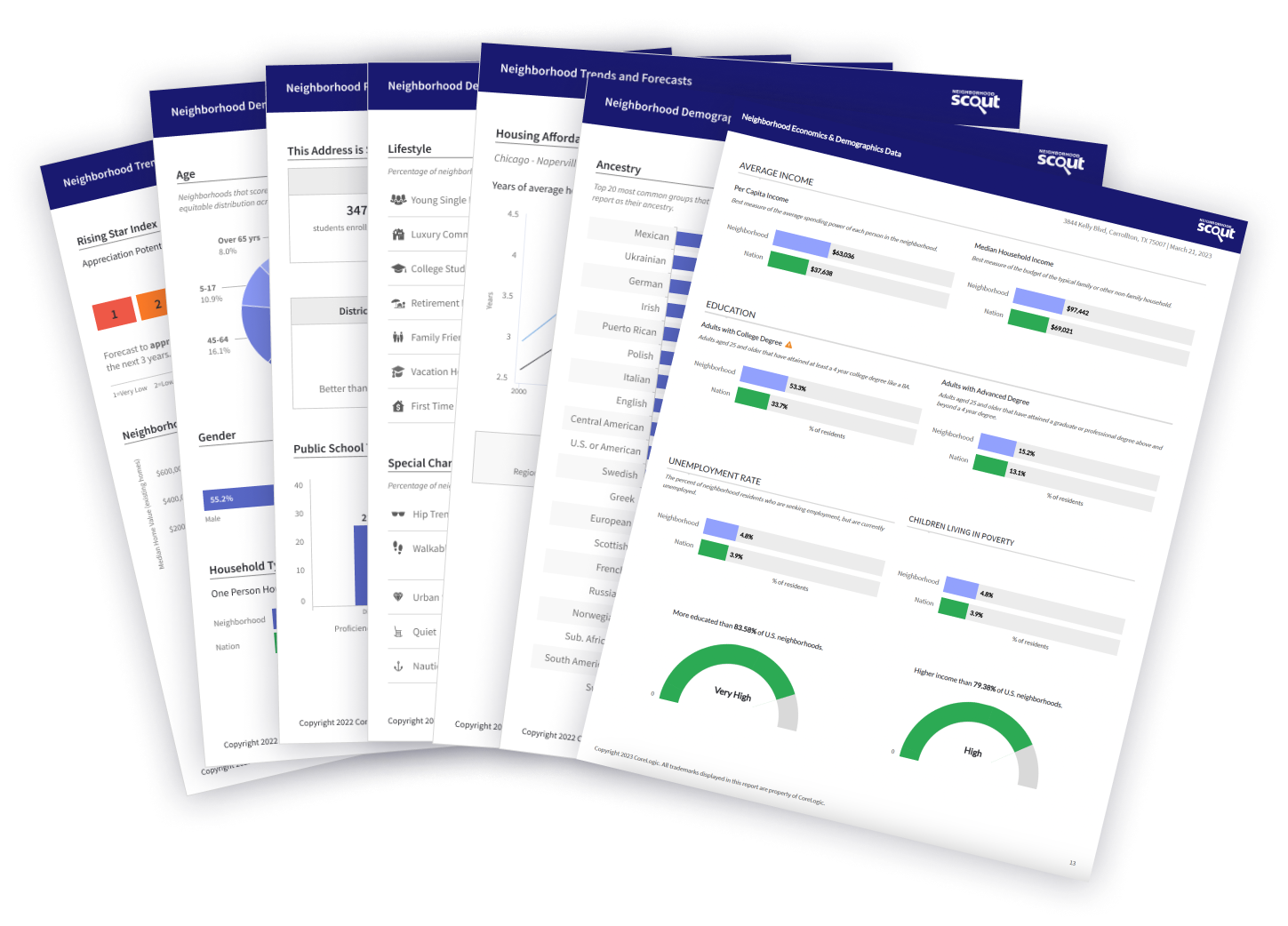
Real Estate includes:
Average Home Values
Rental Market
Housing Market Details
Neighborhood Setting
Economics & Demographics include:
Lifestyle & Special Character
Household Types
Commute To Work
Migration & Mobility
Race & Ethnic Diversity
Employment Industries & Occupations
Income & Unemployment Rate
Higher Education Attainment
Crime includes:
Neighborhood Crime Index
Crimes Per Square Mile
Property Crime Comparison
Violent Crime Comparison
Schools include:
School Ratings
Schools In District
Public School Test Scores
School District Enrollment
Educational Expenditures

comparable neighborhoods nearby